
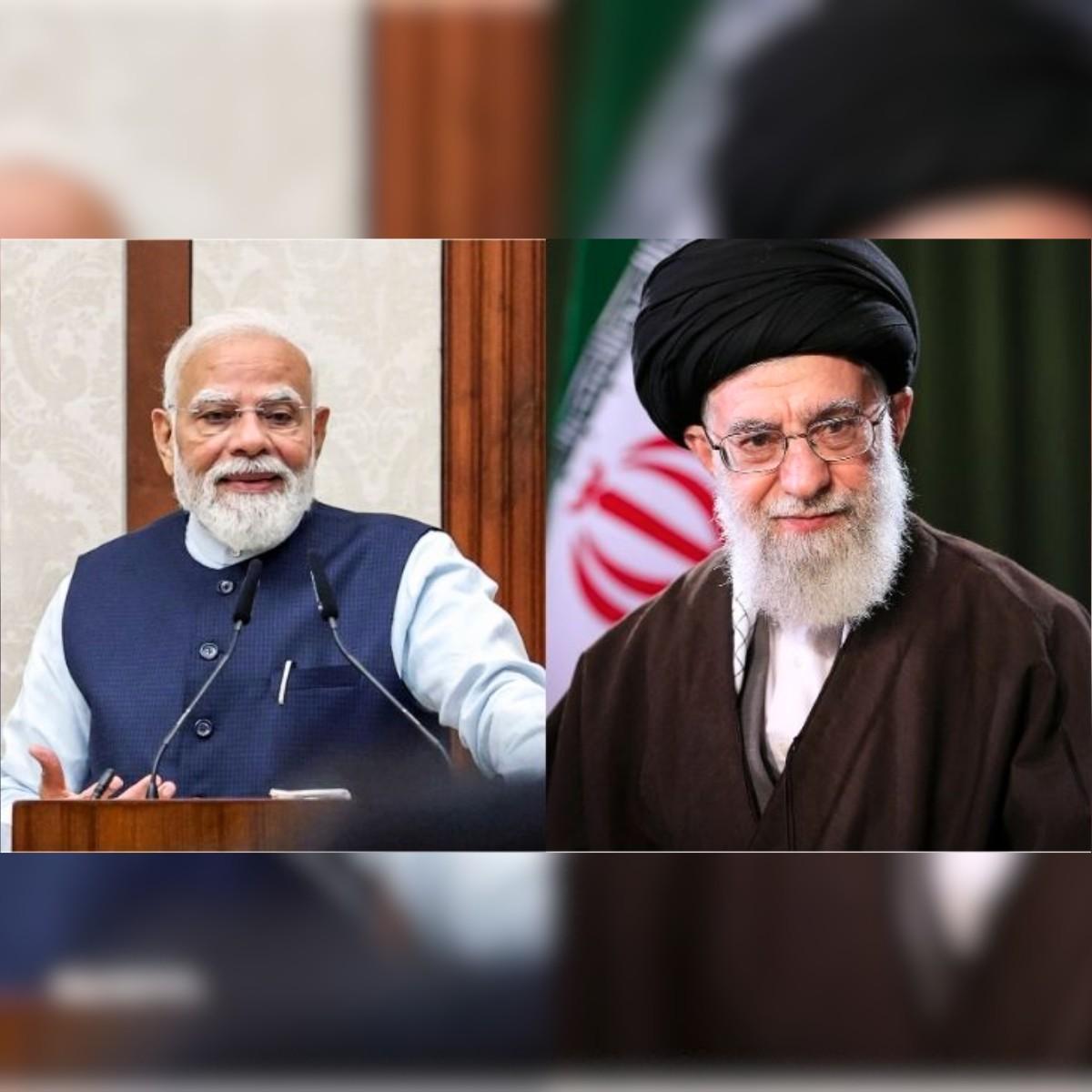
New Delhi: India Iran Relations 2026 received fresh diplomatic attention after Iran’s Supreme Leader, Ayatollah Mojtaba Khamenei, responded to Prime Minister Narendra Modi’s Eid-ul-Adha greetings. In his message, Khamenei thanked Prime Minister Modi and expressed confidence that the long-standing friendship between India and Iran would continue to grow stronger.
According to Iranian sources, the Supreme Leader acknowledged receiving Prime Minister Modi’s message and conveyed his sincere appreciation for the goodwill gesture.
Supreme Leader Expresses Confidence in Bilateral Ties
Furthermore, Mojtaba Khamenei said that India and Iran have built their relationship on mutual respect, trust, and shared interests. He expressed hope that both governments would continue working together to strengthen their historic partnership.
He also wished Prime Minister Modi, the Government of India, and the people of India continued peace, prosperity, and progress. In addition, he prayed for India’s sustained development and success.
The message has attracted attention because it is widely reported as the first public communication from Mojtaba Khamenei to Prime Minister Modi after assuming the role of Iran’s Supreme Leader.
Invitation and Diplomatic Engagement
Meanwhile, reports indicate that Iranian President Masoud Pezeshkian had earlier invited Prime Minister Modi to attend the funeral of former Supreme Leader Ayatollah Ali Khamenei. Mojtaba Khamenei later assumed the country’s highest leadership position following his father’s death.
Although Mojtaba Khamenei has largely stayed away from public appearances, his official messages continue to reach international leaders.
Some media reports have also claimed that he suffered injuries during recent military attacks. However, there has been no official confirmation of those reports.
India and Iran Share Long-Standing Partnership
The India Iran Relations 2026 framework rests on decades of cooperation in politics, trade, energy, connectivity, and cultural exchanges.
Moreover, the Chabahar Port project remains one of the most significant pillars of bilateral cooperation. Both countries have also worked together on maritime security, regional stability, and counter-terrorism initiatives.
These partnerships continue to play an important role in strengthening strategic cooperation between New Delhi and Tehran.
Challenges Continue Despite Strong Ties
However, India-Iran relations have faced several challenges in recent years. US sanctions, changing geopolitical conditions in West Asia, and regional tensions have affected bilateral cooperation.
Even so, both countries continue to explore opportunities to expand trade, improve connectivity, strengthen energy cooperation, and advance development projects.
Analysts believe that regular diplomatic exchanges, including the recent Eid greetings, reflect both nations’ commitment to maintaining their traditional friendship.
Conclusion
The recent exchange of Eid-ul-Adha greetings has added fresh momentum to India Iran Relations 2026. Iran’s Supreme Leader expressed optimism about stronger cooperation, while both countries continue to deepen engagement across strategic, economic, and cultural sectors. Although geopolitical challenges remain, India and Iran appear committed to preserving and expanding their long-standing partnership.
Key Points of the News
- India Iran Relations 2026 gained momentum after Iran’s Supreme Leader Mojtaba Khamenei responded to PM Narendra Modi’s Eid-ul-Adha greetings.
- Khamenei thanked PM Modi and expressed confidence that India-Iran friendship will continue to strengthen.
- He said bilateral ties are built on mutual trust, respect, and shared interests.
- The Chabahar Port project and cooperation in trade, energy, and regional security remain central to India-Iran relations.
- Despite geopolitical challenges and sanctions, both countries continue working to expand cooperation and strengthen diplomatic ties.