
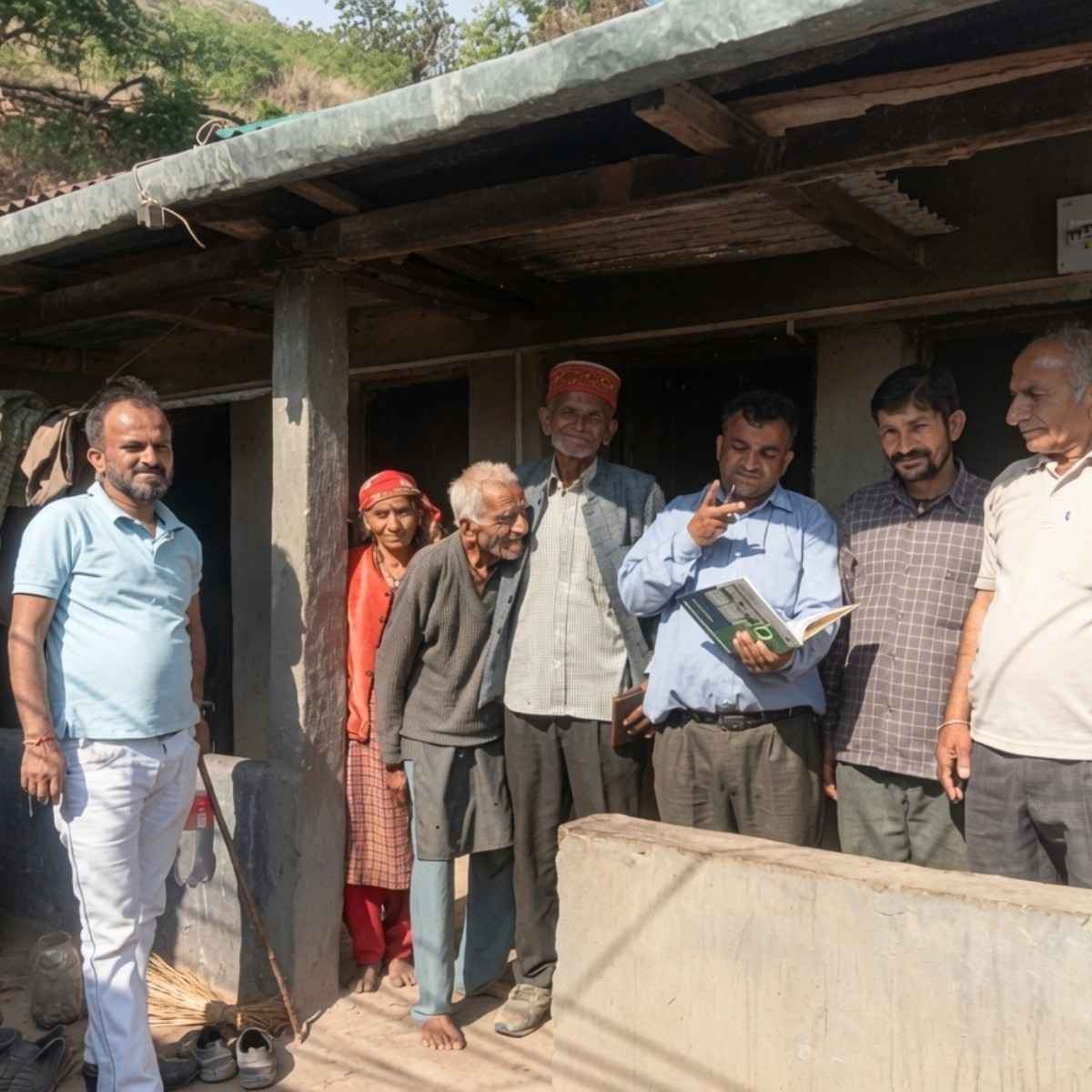
Mandi (Kameshwar Sharma): Despite repeated promises of development and improved infrastructure, Beludhank Village Road Connectivity remains one of the biggest challenges facing residents of the remote village in Parlog Panchayat of Karsog subdivision. Decades after India’s independence, the village still lacks a proper road, forcing residents to rely on narrow footpaths and traditional ropeway systems for transportation.
As a result, villagers continue to face significant hardships in accessing healthcare, education, government services, and essential daily needs.
Residents Struggle Without Basic Road Access
The absence of Beludhank Village Road Connectivity affects every aspect of life. Villagers say they must undertake long and difficult journeys on foot to reach nearby markets, schools, and government offices.
Moreover, the lack of transportation facilities increases the challenges faced by elderly residents, women, and children. Consequently, many families feel isolated from mainstream development despite living in a democratic nation that has witnessed major infrastructure growth.
Election Promises Yet No Progress
Residents allege that political leaders and public representatives frequently visit the village during election campaigns. During these visits, they promise road construction and improved development.
However, villagers claim that those promises disappear once elections conclude. Furthermore, they say they have repeatedly raised the issue with government departments and elected representatives, yet authorities have failed to take meaningful action.
Therefore, frustration among villagers continues to grow with each passing year.
Healthcare and Education Hit Hard
The lack of Beludhank Village Road Connectivity has severely affected healthcare services in the area. Whenever a resident falls seriously ill or a pregnant woman requires urgent medical attention, families must carry patients for several kilometers on foot.
In addition, adverse weather conditions make transportation even more difficult. During the monsoon season, narrow pathways become dangerous and often inaccessible.
Consequently, villagers face serious risks while trying to reach hospitals and healthcare centers.
Education has also suffered significantly. Students often travel long distances on foot to attend school, which creates additional challenges and discourages regular attendance.
Poor Connectivity Exposes Development Gaps
Residents point out that they actively participate in every election and continue to place their trust in the democratic process. Nevertheless, they feel that development has bypassed their village.
Moreover, even reaching the Panchayat headquarters requires villagers to navigate difficult terrain. Therefore, they believe the condition of the village reflects the reality behind many development claims made for remote rural areas.
Villagers Demand Immediate Action
Residents question why many remote and mountainous regions across the country now enjoy road connectivity while Beludhank Village Road Connectivity remains unresolved.
Furthermore, they have urged the government, district administration, and local representatives to prioritize road construction in the village. According to villagers, a road is not merely a transportation facility but a lifeline that supports healthcare, education, employment, and overall quality of life.
Warning of Democratic Protest
Villagers have warned that if authorities fail to take concrete steps soon, they may launch a peaceful democratic movement to press for their demands.
Moreover, they insist that Beludhank deserves the same development opportunities available to other villages. Residents believe road access would transform their lives and connect them to essential services and economic opportunities.
Therefore, the community has united behind one demand: immediate action to establish Beludhank Village Road Connectivity and end decades of isolation.
Key Points of the news:
- Beludhank village in Karsog still lacks road connectivity despite decades of demands.
- Residents rely on footpaths and ropeway systems for transportation.
- Healthcare and education services suffer due to poor accessibility.
- Villagers accuse leaders of making promises without delivering results.
- Residents have warned of a democratic protest if road construction does not begin soon.