
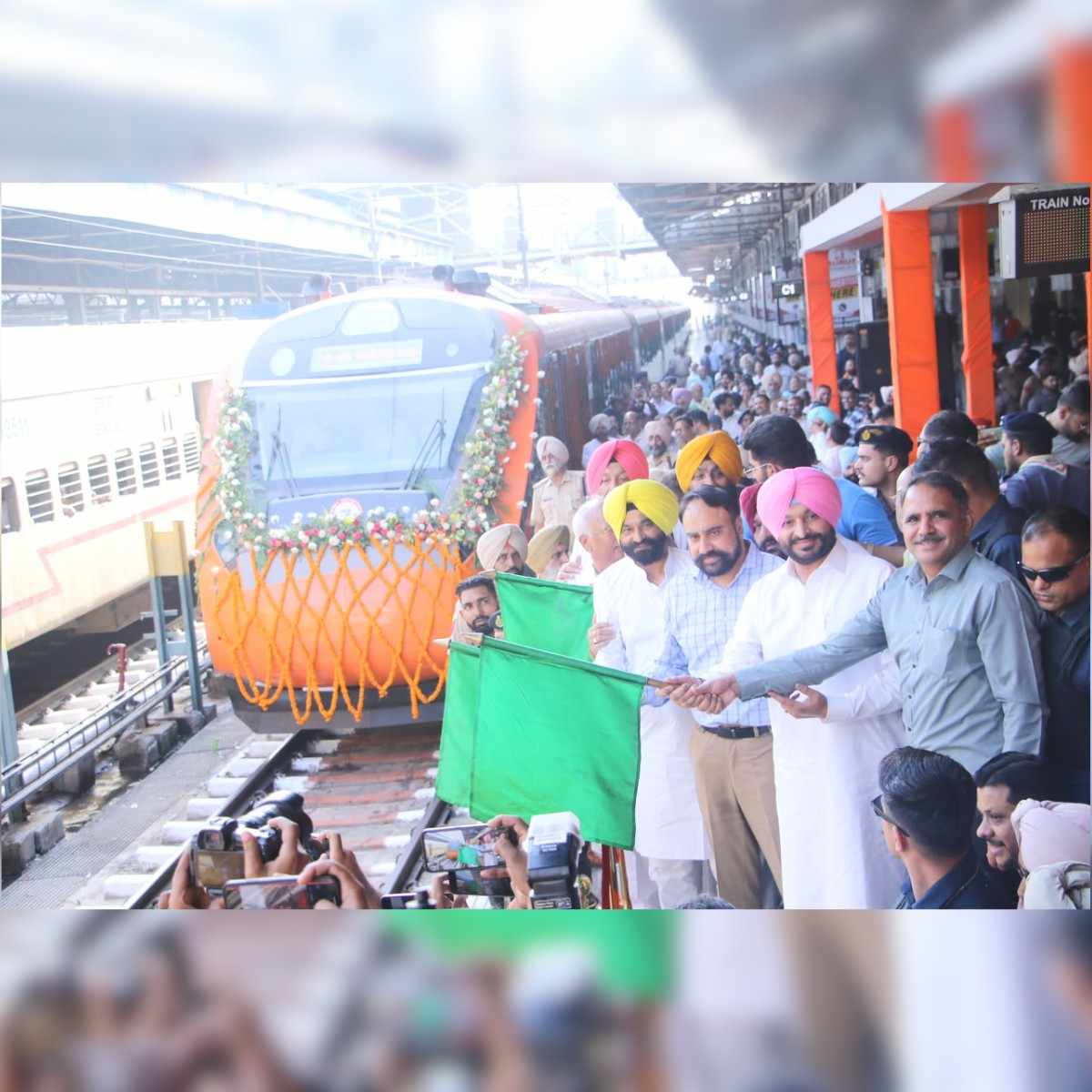
Amritsar (Dawarka Nath Rana): The Beas Station redevelopment project has officially begun under the Amrit Bharat Station Scheme, marking a major step toward modernizing railway infrastructure in Punjab. The project, estimated at around ₹62 crore, aims to upgrade the station with world-class passenger facilities and prepare it for future traffic growth.
Moreover, the initiative reflects the government’s focus on strengthening rail connectivity and improving passenger convenience. As a result, the Beas Junction redevelopment has become one of the key infrastructure development projects in the region.
Major Upgrade Under Amrit Bharat Station Scheme
The redevelopment of Beas Junction focuses on transforming the station into a modern transport hub. According to officials, the station currently handles around 106 trains daily, including 98 stoppages and 8 originating or terminating services.
In addition, daily passenger traffic stands at approximately 6,166, which is expected to rise to nearly 19,500 in the coming years. Therefore, the Beas Station redevelopment has been planned to meet future demand efficiently.
Officials will construct a new station building on the GT Road side, while they will preserve the heritage architecture of the existing structure.
Expansion of Platforms and Passenger Capacity
As part of the redevelopment plan, authorities will construct a new platform, increasing the total number from two to three. This expansion will significantly improve operational capacity and reduce congestion.
Furthermore, authorities will build a new 6-meter-wide Foot Over Bridge (FOB) on the Amritsar side to enhance passenger movement. They will also extend the existing FOB toward the second entry point.
Therefore, the Beas station redevelopment will ensure smoother passenger flow and better safety.
Improved Access, Parking, and Circulation Areas
The project also includes a complete redesign of circulation areas on both the Dera Road and GT Road sides. Officials will develop improved access routes, parking zones, and dedicated pick-up and drop-off points.
Moreover, planners will create separate parking facilities for cars, buses, and two-wheelers. They will also make special arrangements to manage heavy traffic during fairs and peak travel periods.
As a result, the Beas station redevelopment will significantly enhance travel convenience for passengers.
Launch of Vande Bharat Route Strengthens Connectivity
During the announcement, Rail Minister of State Ravneet Singh highlighted another major development—the launch of the Amritsar–Shri Mata Vaishno Devi Katra Vande Bharat Express via Gurdaspur and Batala.
This new route reduces travel distance by around 84 kilometers and saves approximately 40 minutes of travel time. In addition, the train covers nearly 283 kilometers in about five hours.
Therefore, the Beas Junction redevelopment aligns with broader efforts to improve rail connectivity between Punjab and Jammu & Kashmir.
Boost to Tourism and Economic Growth
The new Vande Bharat route strengthens the religious tourism circuit connecting Shri Harmandir Sahib, Durgiana Mandir, Sri Ram Tirath, and Shri Mata Vaishno Devi shrine.
Moreover, officials believe this enhanced connectivity will boost tourism, trade, and economic activity across both states. Consequently, the Beas station redevelopment is expected to contribute to regional development.
Government’s Vision for Modern Rail Infrastructure
Officials thanked the Prime Minister, Home Minister, and Railway Minister for supporting these development initiatives. They emphasized that the project reflects India’s commitment to modernizing railway infrastructure.
In addition, they stated that the Beas Junction redevelopment represents a major milestone in improving passenger experience and operational efficiency.
Key Points of the news:
- Beas Junction redevelopment launched under Amrit Bharat Station Scheme.
- ₹62 crore project aims to upgrade passenger facilities and infrastructure.
- Platform count will increase from 2 to 3 with improved FOB connectivity.
- New Vande Bharat route reduces travel time and enhances connectivity.
- Project boosts tourism, trade, and regional economic development.