
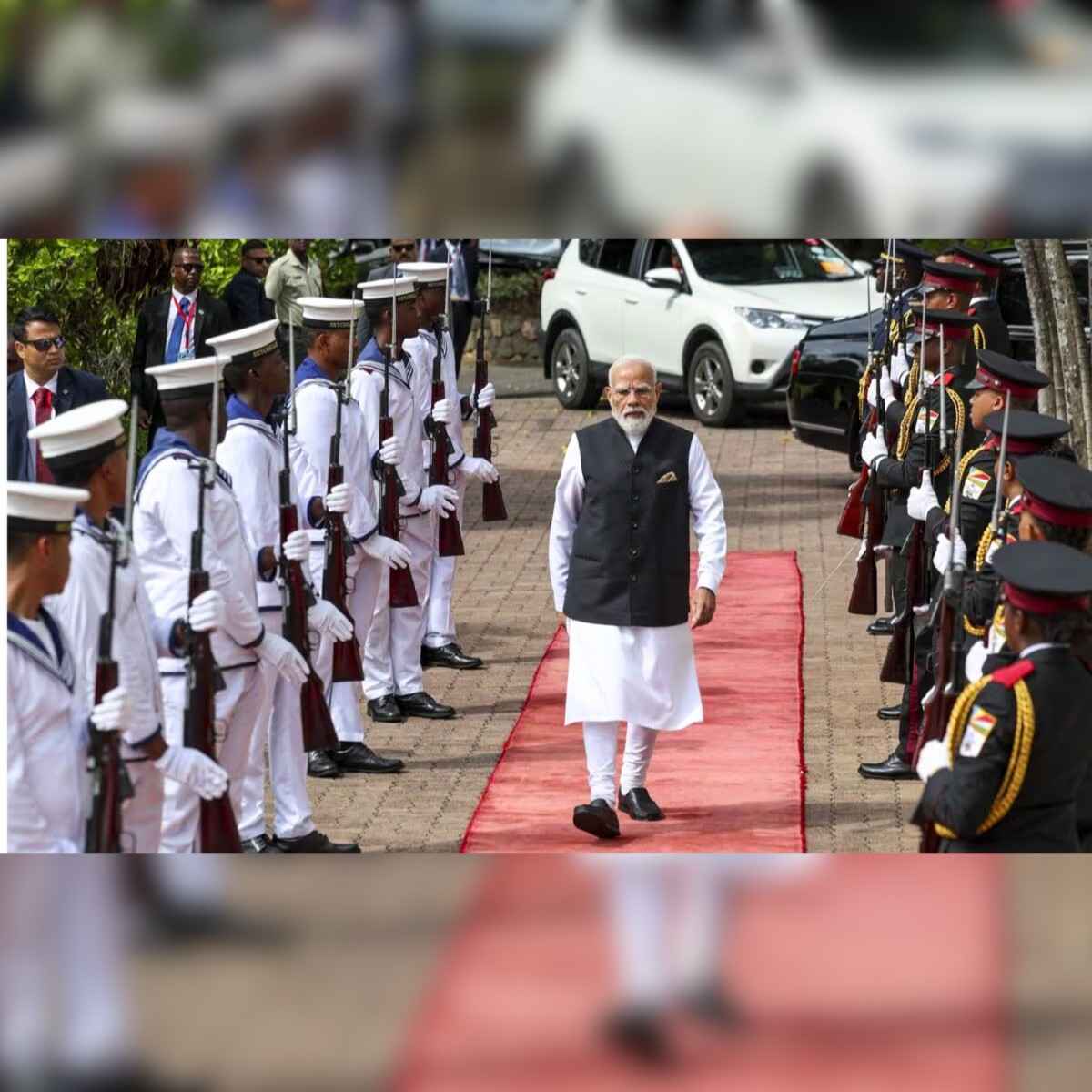
New Delhi: Prime Minister Narendra Modi has highlighted a major shift in the India’s Neighbourhood Policy. During his visit to Seychelles, he said India’s partnerships depend on mutual respect, trust and shared interests, not on the size of a country. His remarks reflect India’s changing diplomatic strategy across South Asia and the Indian Ocean region.
Instead of acting like a “big brother,” India now wants to become a trusted and equal partner. As a result, countries like Nepal and Bangladesh are seeing a different approach from New Delhi.
India Promotes Equal Partnerships
India remains South Asia’s largest economy and strongest military power. Therefore, many neighbouring countries have often viewed India as the dominant regional force.
That perception grew stronger after Nepal’s constitutional crisis in 2015. Bangladesh also raised concerns at different times about India’s regional priorities. Meanwhile, China increased its influence by taking advantage of those concerns.
However, the India Neighbourhood Policy has changed significantly. India now focuses on dialogue, cooperation and mutual respect instead of pressure.
Nepal Reflects India’s New Diplomatic Approach
Relations between India and Nepal faced several challenges. These included the Kalapani-Lipulekh dispute, Nepal’s revised political map and China’s growing presence.
However, India gradually changed its strategy. It reduced public comments on Nepal’s domestic politics. Instead, it continued diplomatic dialogue and expanded development cooperation.
Today, both countries work together on railway links, petroleum pipelines, electricity transmission lines and integrated border check posts. In addition, cross-border electricity trade has become a major success.
Nepal exports hydropower to India. Consequently, Nepal earns more revenue while India receives clean energy. This partnership benefits both countries and strengthens long-term relations.
India Engages All Political Stakeholders
India has also expanded its political outreach in Nepal. Previously, New Delhi mainly worked with the government in Kathmandu. Now, it communicates with all major political parties.
Recently, senior Nepali leaders visited New Delhi. They met government officials and BJP leaders. This party-to-party diplomacy demonstrates India’s commitment to maintaining stable relations, regardless of political changes.
Therefore, India’s message remains clear. It wants lasting partnerships with every major political force in Nepal.
Bangladesh Remains a Strategic Partner
Bangladesh continues to play a vital role in the India’s Neighbourhood Policy. After political changes in Dhaka, many expected India to adopt a tougher position.
Instead, India continued discussions on trade, security and connectivity. Moreover, New Delhi strengthened diplomatic engagement instead of reducing it.
India also granted its High Commissioner in Dhaka protocol status equal to a Cabinet Minister. As a result, the decision highlighted Bangladesh’s strategic importance in India’s regional policy.
The move also sent a strong message to other regional powers. India intends to deepen long-term cooperation with Bangladesh.
PM Modi’s Seychelles Visit Carries a Bigger Message
Seychelles is one of the world’s smallest island nations. Nevertheless, PM Modi chose this country to deliver an important diplomatic message.
He stated that relationships should never depend on a country’s size. Instead, they should grow through trust, equality and shared interests.
Therefore, the statement reached far beyond Seychelles. It signalled India’s commitment to building stronger partnerships across South Asia and the Indian Ocean region.
Conclusion
The India’s Neighbourhood Policy is entering a new phase. India now prioritizes trust, equality and shared development over regional dominance.
Furthermore, stronger ties with Nepal, Bangladesh and Seychelles show this policy in action. Economic cooperation, political engagement and mutual respect now shape India’s diplomacy.
Overall, the new India’s Neighbourhood Policy aims to create stronger regional partnerships. If this approach continues, India could strengthen both regional stability and long-term economic cooperation.
Key Points of the news:
- India is reshaping its neighbourhood policy around trust, equality and mutual respect.
- Nepal and Bangladesh have become key examples of India’s new diplomatic strategy.
- India is focusing on economic cooperation through energy, connectivity and infrastructure projects.
- Political engagement now extends beyond governments to include major political parties.
- PM Modi’s Seychelles speech reinforces India’s vision of partnership over dominance.