
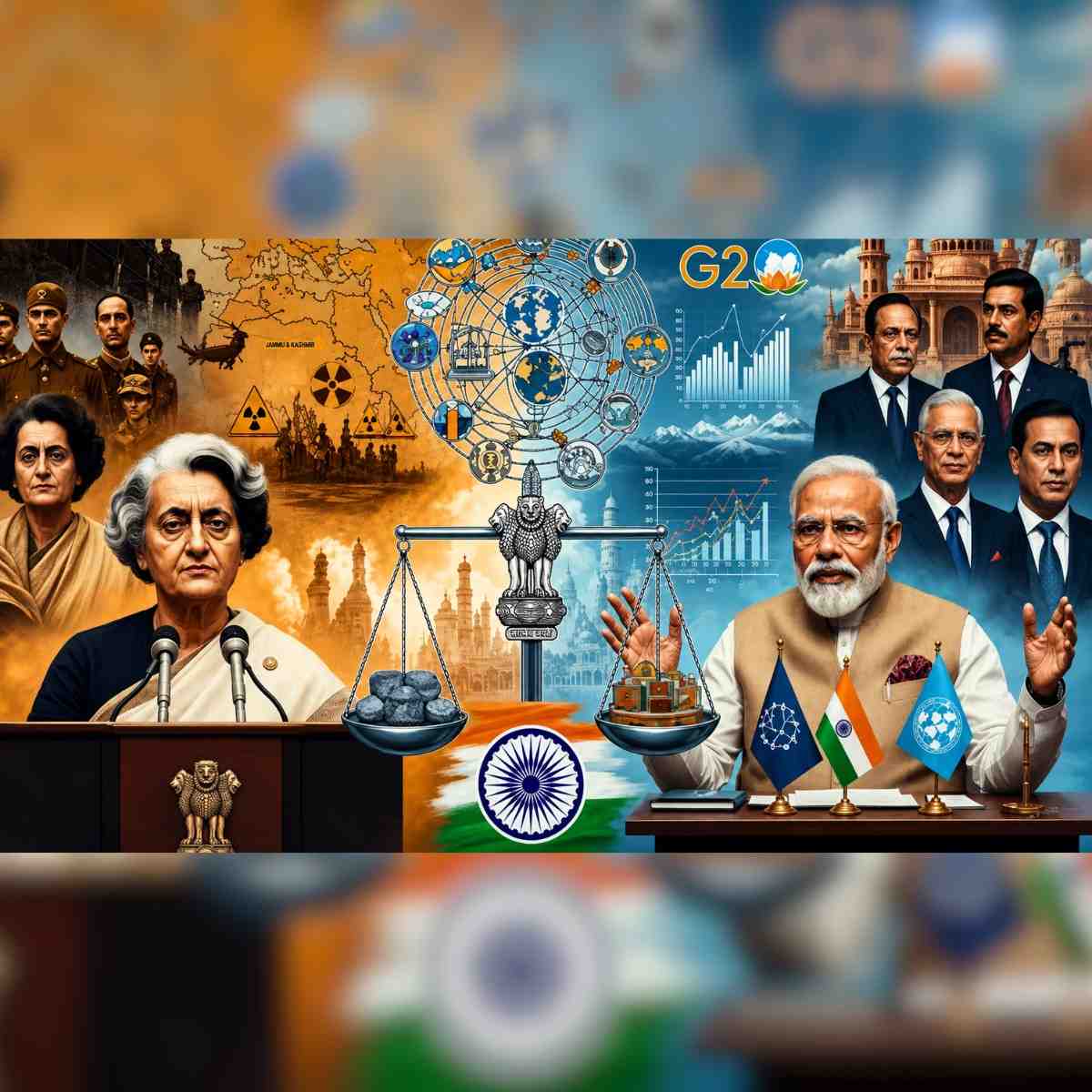
New Delhi: India’s Foreign Policy Shift over the past fifty years shows a clear transformation. The country has moved from an ideology-based approach to a national interest-driven strategy.
The comparison between the 1973 global oil crisis and the 2026 geopolitical tensions linked to the Israel-Iran conflict clearly reflects this change. Today, India focuses more on practical outcomes than ideological alignment.
1973 Oil Crisis and Ideological Approach
During the 1973 oil crisis, India followed an ideology-driven foreign policy. At that time, Prime Minister Indira Gandhi supported Arab nations openly.
Moreover, India viewed Israel as responsible for the conflict. As a result, it adopted a strong pro-Arab position in international diplomacy.
India also supported key resolutions at the United Nations. It backed the PLO’s observer status in 1974 and voted in favor of linking Zionism with racism.
However, this ideological stance did not bring economic benefits. Instead, oil prices increased sharply by nearly 300 percent due to OPEC actions.
Consequently, India faced rising import costs, inflation, and economic pressure on citizens. This period highlighted the limitations of ideology-focused diplomacy.
2026 Crisis and Pragmatic Diplomacy
In contrast, the 2026 geopolitical tensions involving Israel and Iran showed a different approach. During this period, India adopted a balanced and pragmatic strategy.
Under Prime Minister Narendra Modi, India avoided supporting any single side. Instead, it focused on peace, dialogue, and regional stability.
Moreover, India prioritized its national energy security. This reflects the core of India’s Foreign Policy Shift toward national interest.
Energy Security and Diversification Strategy
India strengthened its energy security by diversifying oil imports. Today, the country sources crude oil from nearly 40 countries.
In addition, strong diplomatic relations with West Asia ensured stable energy supply chains. This helped reduce dependence on any single region.
As a result, Indian refineries continued operations without disruption. Fuel availability remained stable even during global market uncertainty.
Protection from Global Economic Shocks
India’s Foreign Policy Shift also helped protect consumers from global price shocks. Despite volatility in international oil markets, domestic fuel supply remained stable.
Furthermore, petrol, diesel, and LPG availability was not affected. This helped control inflation and reduced financial pressure on households.
Conclusion
India’s Foreign Policy Shift clearly demonstrates a transition from ideology-based diplomacy to a national interest-driven approach.
Today, India prioritizes energy security, economic stability, and strategic autonomy. This modern approach ensures resilience in a rapidly changing global environment.
Key Highlights of the news:
- India’s Foreign Policy Shift shows move from ideology to national interest.
- 1973 oil crisis reflected ideology-driven diplomatic decisions.
- 2026 crisis highlights balanced and pragmatic foreign policy.
- Energy security and diversification became key priorities.
- Stable fuel supply protected Indian economy from global shocks.