
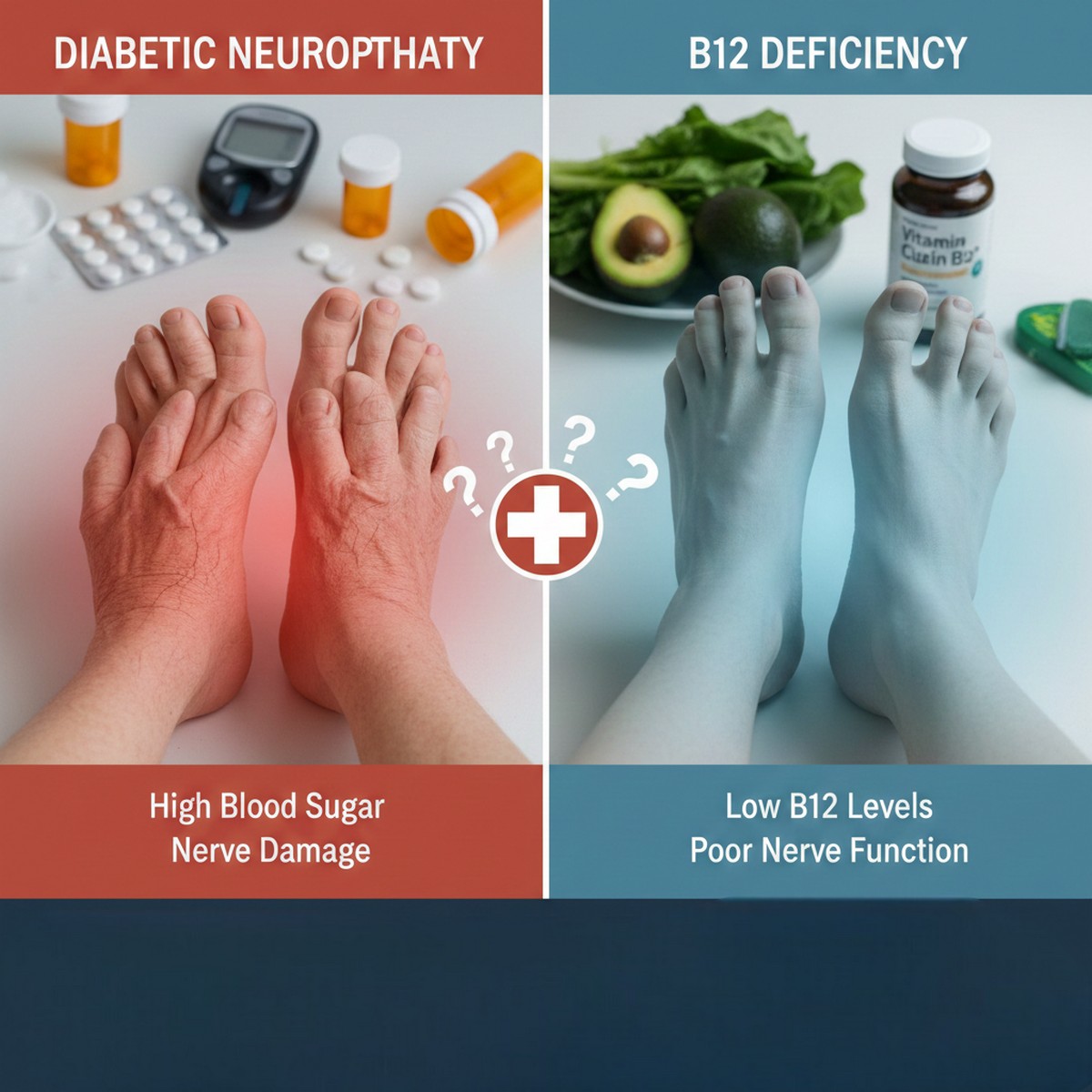
Do you often experience tingling in your feet, numbness in your hands, or a burning sensation—and your doctor says it’s diabetic neuropathy? But is high blood sugar always the only cause?
According to senior nutrition dietitian Dr. Archita Mahajan, long-term use of metformin may lead to Vitamin B12 deficiency, which can produce symptoms that closely mimic diabetic neuropathy.
As per the American Diabetes Association (ADA), prolonged use of metformin can reduce Vitamin B12 levels, potentially causing peripheral neuropathy. Therefore, assuming all nerve-related symptoms in diabetic patients are due to high glucose levels—without checking B12—can be misleading.
How Vitamin B12 Is Absorbed
Vitamin B12 binds in the stomach to a protein called Intrinsic Factor (IF).
This B12–IF complex then travels to the small intestine, where it attaches to the Cubam receptor and gets absorbed into the body.
Metformin can interfere with this process. It affects calcium-dependent B12 absorption, leading to reduced B12 uptake.
The chain reaction:
Metformin → Reduced B12 absorption → Poor nerve nourishment → Neuropathy-like symptoms
The Link Between B12 and Neuropathy
Vitamin B12 plays a vital role in nerve protection. It helps form the myelin sheath, a protective covering around nerves that ensures fast and accurate transmission of signals.
When B12 levels drop:
- Tingling sensations
- Numbness
- Burning feelings
- Nerve pain
may develop.
How to Protect Yourself
✔ Check Your B12 Levels
If you are on long-term metformin therapy, get your Vitamin B12 levels tested every 6–12 months.
✔ Maintain Adequate Calcium Intake
Calcium supports proper B12 absorption.
Calcium-rich foods:
Milk, yogurt, cheese, almonds, leafy greens, soy, tofu
✔ Natural Sources of Vitamin B12
- Eggs
- Milk and dairy products
- Fish and chicken
- Fortified cereals
- Fortified plant-based milk
✔ Don’t Ignore Symptoms
If you notice tingling, numbness, or burning sensations in your hands or feet, consult your doctor promptly.