
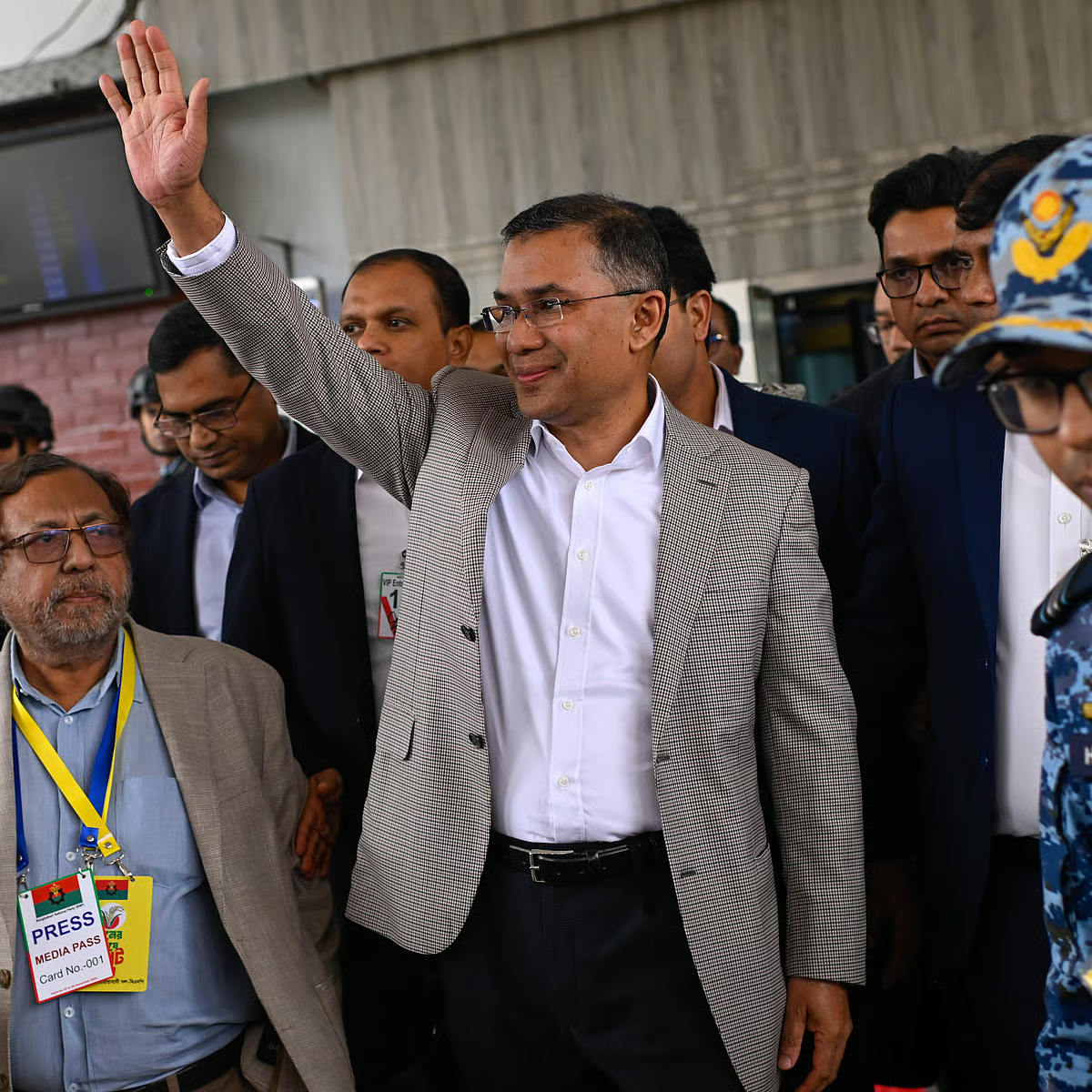
Tarique Rahman, acting chairperson of the Bangladesh Nationalist Party (BNP) and son of former Prime Minister Khaleda Zia, touched down in Dhaka on December 25 after nearly two decades in self-imposed exile, instantly electrifying the political landscape with vows to register as a voter and contest from his Bogura-6 stronghold.
Touching down amid tight security at Hazrat Shahjalal International Airport, Rahman waved to cheering supporters chanting BNP slogans, marking a seismic shift in Bangladesh’s post-upheaval power equation under Muhammad Yunus’s beleaguered interim setup.
Homecoming Fuels Election Hopes Amid Turmoil
Rahman’s return injects fresh momentum into BNP’s grassroots machinery, positioning him as a frontrunner to challenge Awami League remnants and radical fringes in anticipated snap elections. Party insiders hail his strategic timing, leveraging diaspora networks and youth mobilization to counter Yunus’s flagging grip on law-and-order breakdowns.
Exiled since 2008 amid graft charges he dismisses as political vendetta, Rahman addressed virtual rallies from London, now pledging on-ground revival through voter drives and anti-corruption pledges that resonate with inflation-weary masses.
Stabilizer or Spark for Chaos?
Analysts view his comeback as a potential circuit-breaker for Yunus’s administration, battered by minority lynchings and economic freefall, yet warn it could ignite factional clashes if BNP pushes aggressive timelines. With Khaleda Zia’s health fragile, Rahman emerges as BNP’s undisputed torchbearer, eyeing a democratic reset that could redefine South Asia’s volatile neighborhood.