
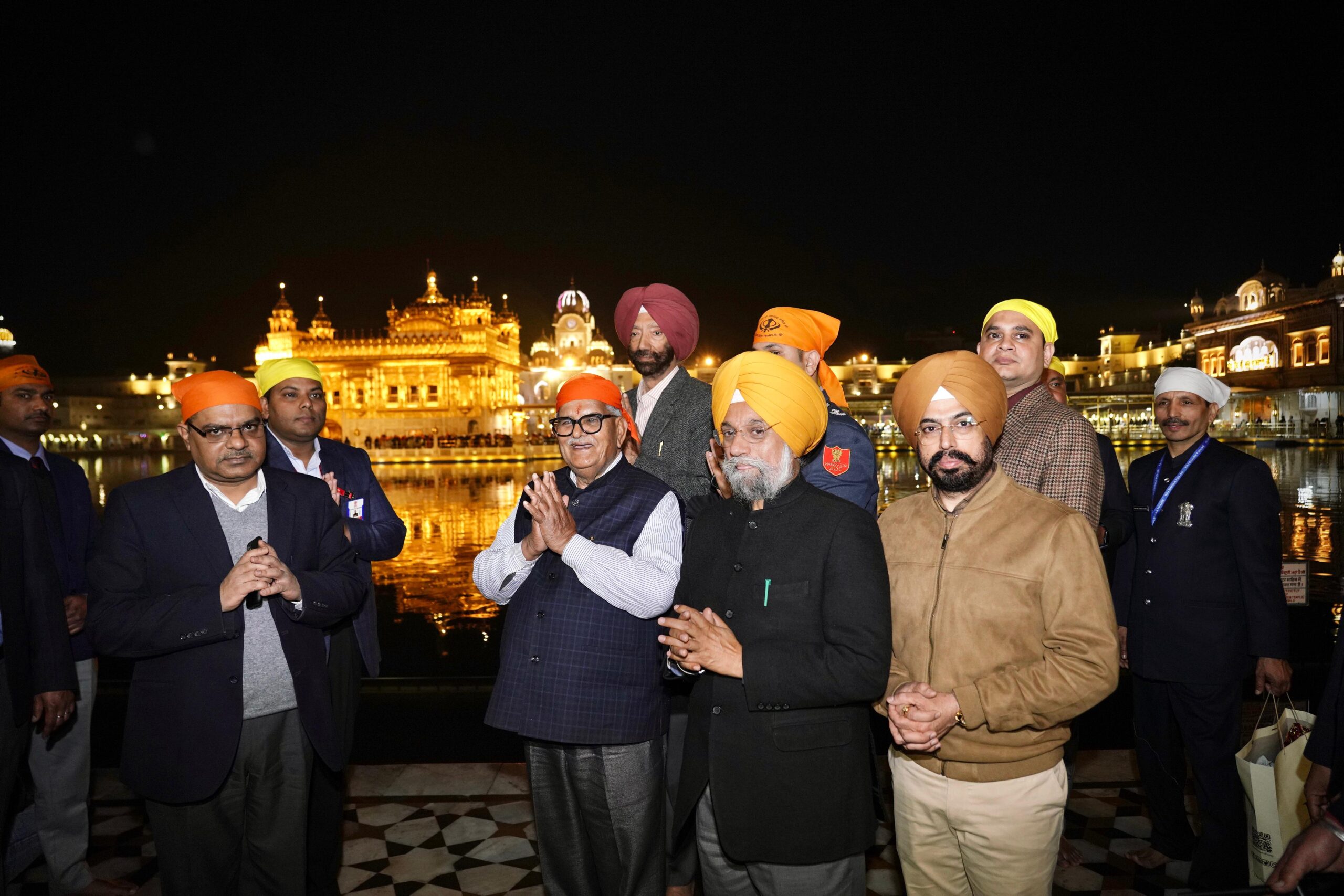
Punjab Governor and Administrator of Chandigarh, Shri Gulab Chand Kataria, paid obeisance at Sri Darbar Sahib on Sunday evening and offered prayers for the welfare of all before launching a major anti-drug awareness campaign in the state. Earlier today, the Governor also paid obeisance at a Jain temple in Amritsar.
After seeking divine blessings, the Governor formally flagged off a four-day anti-drug foot march aimed at strengthening the fight against drug abuse, particularly in Punjab’s border districts. The campaign is being organized with the support of the Punjab Red Cross Society and focuses on creating widespread public awareness about the harmful effects of drugs.
Speaking on the occasion, Governor Kataria emphasized that the fight against drugs must go beyond strict law enforcement and include rehabilitation, social reintegration, and employment-oriented solutions. He called upon all sections of society to join hands and turn the anti-drug campaign into a people’s movement.
Providing details of the foot march, the Governor said the four-day awareness campaign will cover border districts including Tarn Taran, Ferozepur, Fazilka, and Abohar. The schedule includes a march in Tarn Taran city on February 9; from Saragarhi Memorial to Government School of Eminence in Ferozepur on February 10; from Sanjeev Cinema to Clock Tower in Fazilka on February 11; and from the Municipal Corporation Office to DAV College in Abohar on February 12.
The Governor stressed that drug abuse is not just a local or state-level issue but a global challenge that requires sustained and collective efforts. He urged social, religious, political, and educational institutions, along with NGOs and community organizations, to actively participate and support the campaign.
Reiterating his commitment to a drug-free Punjab, Governor Kataria said meaningful change can only be achieved through continuous efforts, active public participation, and a rehabilitation-focused approach that restores dignity and provides livelihood opportunities to affected individuals.