
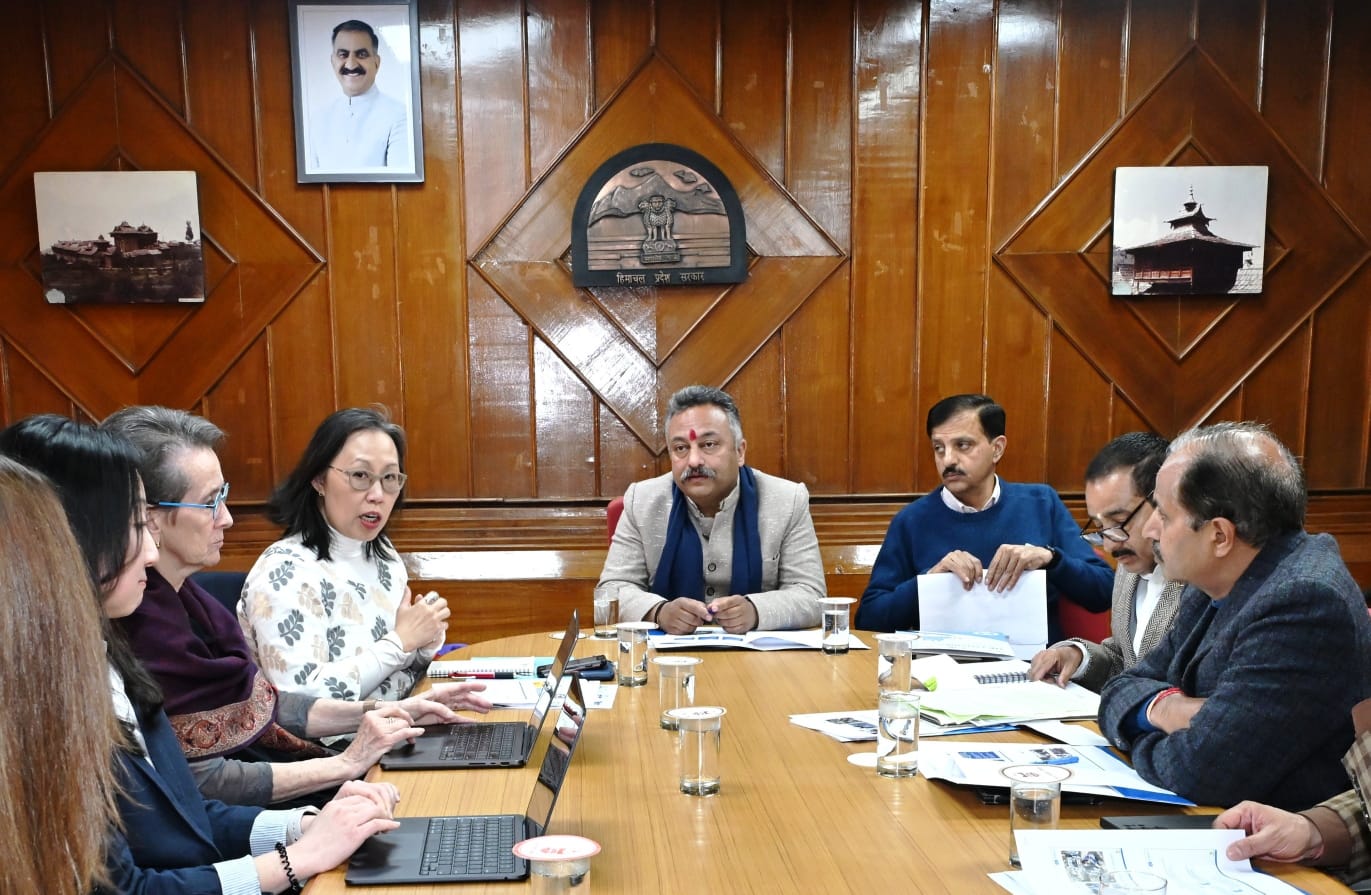
Himachal Pradesh Education Minister Rohit Thakur on Thursday chaired the third steering committee meeting of the UNESCO-supported ‘HP Futures’ project under Samagra Shiksha, reviewing its progress and outlining the next phase of education reforms in the state.
The initiative is being implemented in collaboration with UNESCO and aims to strengthen quality and inclusive education in line with National Education Policy 2020 and the National Curriculum Framework 2023.
Commitment to World-Class Education
Addressing the meeting, Rohit Thakur said the agreement with UNESCO reflects the state government’s commitment to delivering quality and globally competitive education. He emphasized that despite geographical challenges and natural disasters, the government is ensuring that students in remote areas receive education on par with urban regions.
Launched in 2025, the ‘HP Futures’ project focuses on developing climate-sensitive and future-ready PM SHRI Schools and other institutions across the state.
Three Key Pillars of the Project
The project is built on three core pillars:
- Skill-based education
- Value-based learning through sports
- Green education
It aims to nurture creativity, discipline, leadership, teamwork, and environmental awareness among students.
Training and Expansion Plan
The minister informed that after the first steering committee meeting in September 2025, extensive consultations were held with civil society organisations, Samagra Shiksha, SCERT, and DIET institutions. Around 200 teachers, including senior secondary physical education lecturers, are being trained to impart moral values through sports.
Eco-clubs have been strengthened, and student participation in environmental activities has increased significantly.
Under a phased implementation plan, reforms will initially begin in 12 PM SHRI schools, expand to 99 schools, and eventually be rolled out across Himachal Pradesh.
Thakur stressed better coordination between the Himachal Pradesh School Education Board, SCERT, and DIET institutions, along with regular monitoring to ensure effective implementation.
Focus on Implementation
He directed that UNESCO’s recommendations should not remain limited to reports but must translate into tangible improvements in teaching methods, learning outcomes, and school functioning.
Education Secretary Rakesh Kanwar and UNESCO representatives also presented detailed suggestions based on field visits to various schools. Senior officials from the education department were present during the meeting.
The minister expressed confidence that with UNESCO’s support, Himachal Pradesh will emerge as a model state in the field of education.