
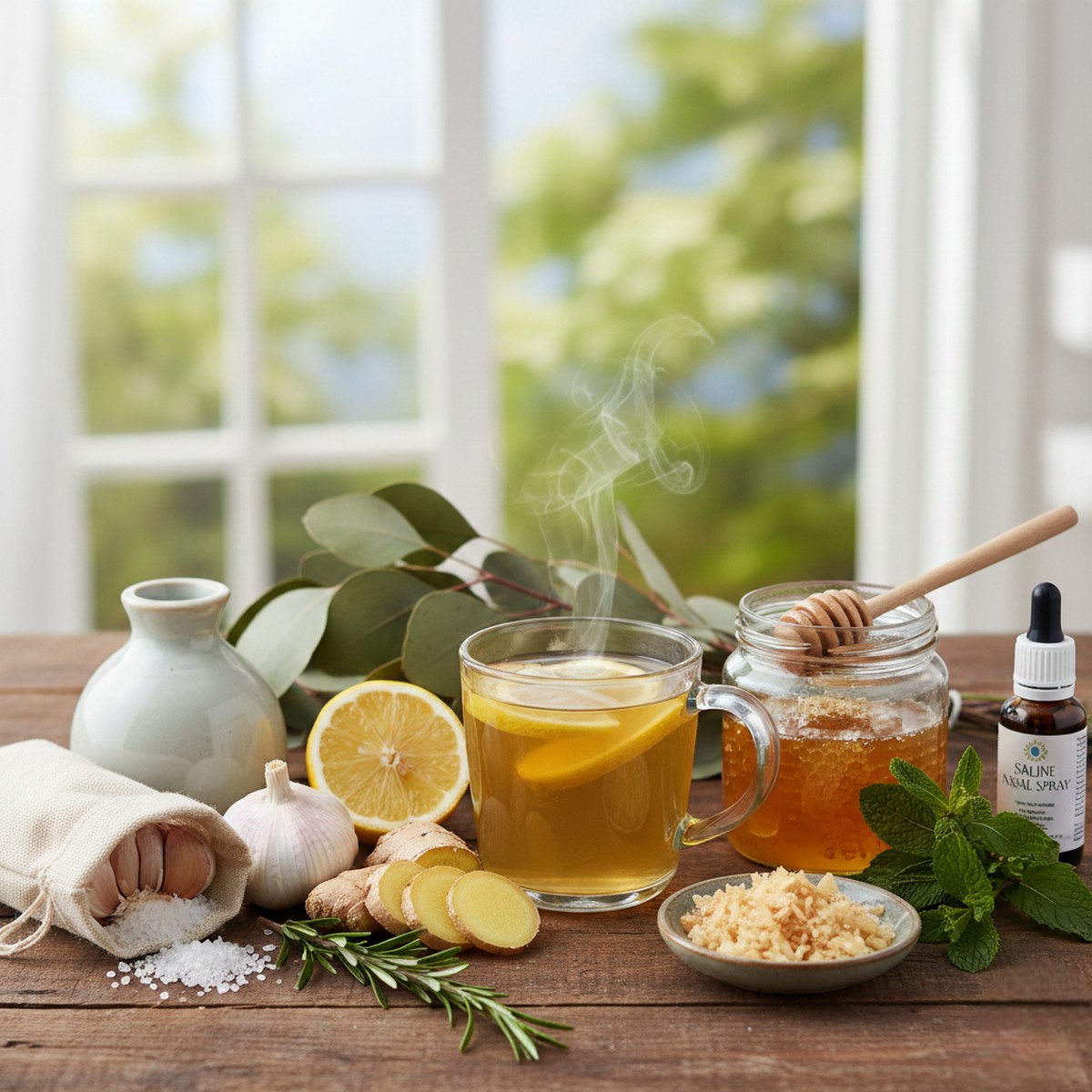
Excess nasal blockage can lead to mucus accumulation in the lungs, resulting in persistent cough and breathing difficulties, says Dr Archita Mahajan, a nutritionist, dietitian and child care specialist with a Master’s degree in Food, Nutrition and Dietetics.
Dr Mahajan explains that phlegm is a thick substance produced by the mucous membranes of the respiratory tract to fight infections. However, when nasal congestion persists, mucus can accumulate in the chest and lungs, causing discomfort and respiratory issues.
She shared several natural remedies that may help relieve congestion and reduce excessive mucus formation.
Ginger for Chest Congestion
Ginger acts as a natural antihistamine and decongestant. It contains antibacterial and expectorant properties that help clear chest and throat congestion.
How to use:
- Eat 3–4 small pieces of ginger daily, or
- Drink 2–3 cups of ginger tea.
Ginger Tea Recipe:
- 6–7 slices of ginger
- 1 teaspoon honey
- 1 teaspoon black pepper
- 2 cups water
Boil water, add ginger and black pepper, simmer for 5 minutes, strain and mix honey before drinking.
Honey and Lemon for Immunity
Lemon is rich in Vitamin C, which strengthens immunity and helps relieve nasal blockage. Honey has antifungal and antibacterial properties that soothe the throat and reduce congestion.
Ingredients:
- 1 tablespoon raw honey
- 2 tablespoons fresh lemon juice
Mix in warm water and drink three times daily for relief.
Turmeric Gargle
Turmeric contains curcumin, a powerful antibacterial compound beneficial for respiratory health.
Ingredients:
- 1 teaspoon turmeric powder
- ½ teaspoon salt
- 1 glass warm water
Mix and gargle four times daily for best results.
Apple Cider Vinegar
Apple cider vinegar helps balance body pH levels and may reduce excessive mucus production. Mix one tablespoon in a glass of water and use for gargling.
Herbal Steam Inhalation
Steam inhalation helps dissolve chest mucus and ease congestion.
Method:
Boil water in a pot and add:
- ½ teaspoon carom seeds (ajwain)
- ½ teaspoon rosemary
Lean over the pot, cover your head with a towel and inhale steam slowly for 5 minutes. Repeat 2–3 times daily.
Dr Mahajan advises that while these remedies can offer relief, persistent respiratory symptoms should be evaluated by a healthcare professional to rule out infections or chronic conditions.