
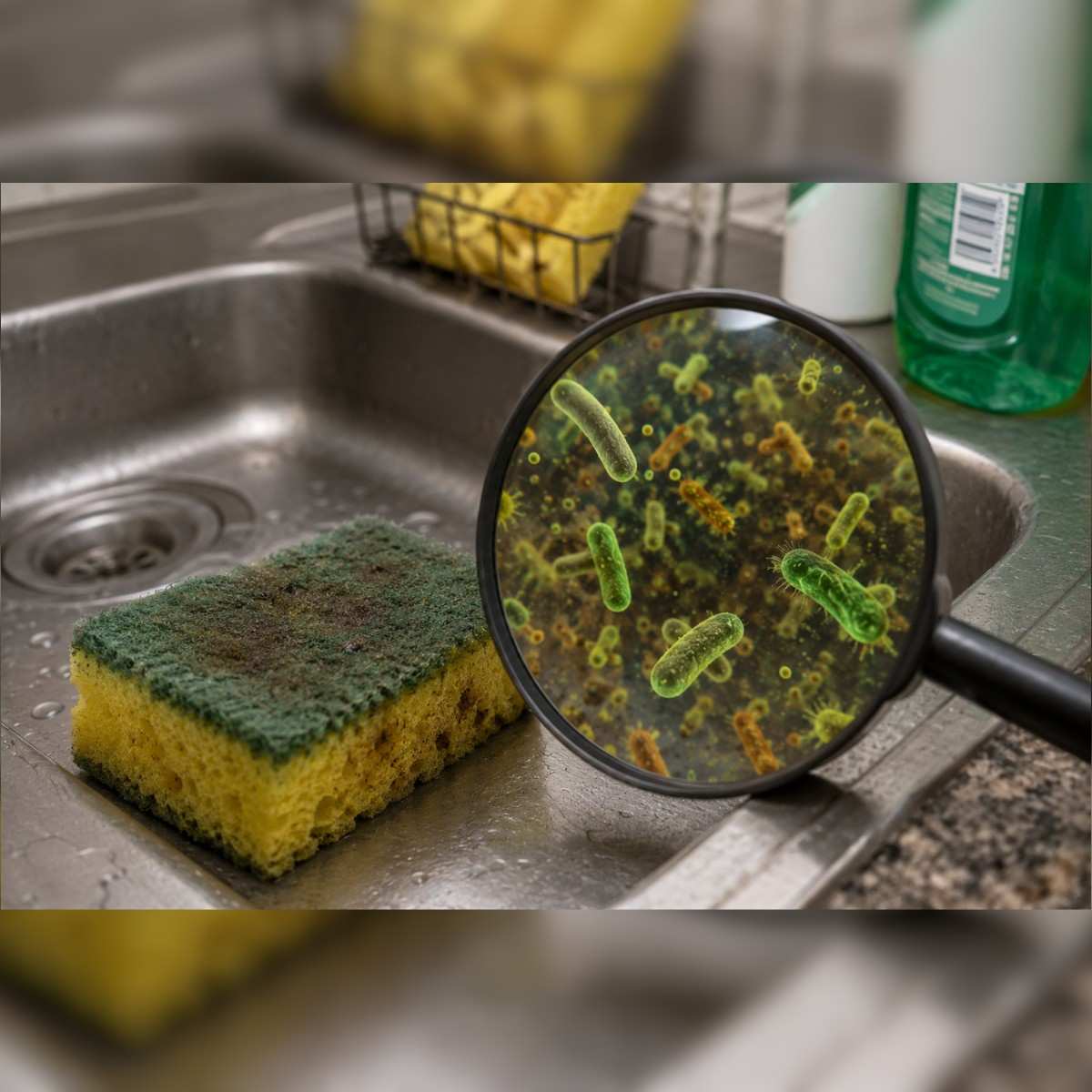
The issue of Kitchen Sponge Hygiene has raised serious concern among health experts and nutrition specialists. Experts now warn that kitchen sponges may contain more bacteria than toilet seats if not cleaned and replaced regularly. Dr. Archita Mahajan, a nutrition and diet expert, has highlighted the hidden risks associated with everyday kitchen cleaning tools.
She explained that most people clean toilet seats using disinfectants. However, they often reuse kitchen sponges for days without proper sanitization.
Why Kitchen Sponges Become a Germ Hub
Kitchen sponges stay wet for long periods. As a result, they create an ideal environment for bacteria to grow rapidly. Food particles such as oil, milk, spices, and raw vegetables often get trapped inside the sponge.
Moreover, the sponge structure contains tiny holes. These pores allow bacteria to hide and multiply easily.
Dr. Mahajan pointed out that this is why poor Kitchen Sponge Hygiene can become a serious health risk in households.
Dangerous Bacteria Found in Sponges
Experts warn that kitchen sponges can carry harmful bacteria. These include:
- E. coli
- Salmonella
- Staphylococcus
- Campylobacter
In addition, studies suggest that sponges can host hundreds of different microbial species. When left wet, the growth becomes even faster.
Research Highlights Shocking Results
Several international studies have shown alarming findings. A well-known German study found billions of bacteria in used kitchen sponges.
Interestingly, researchers discovered that some sponges carried more bacteria than toilet seats. Similar findings were reported in studies conducted in the United States and Europe.
These studies confirm that kitchen sponges are among the most contaminated items in a household.
Risk of Cross-Contamination
Poor Kitchen Sponge Hygiene also increases the risk of cross-contamination. When people use the same sponge for dishes, sinks, and countertops, bacteria spread easily.
Consequently, harmful microbes can enter food through utensils and hands. This increases the risk of food poisoning and stomach infections.
Doctors warn that long-term exposure to contaminated sponges can also lead to diarrhea, kidney infections, and gastrointestinal problems.
How to Maintain Kitchen Sponge Hygiene
Experts recommend simple but effective safety steps:
- Replace kitchen sponges every week
- Disinfect sponges every 2–3 days
- Microwave wet sponges for 1 minute
- Use dishwasher hot cycles when possible
- Always squeeze out water after use
- Store sponges in a dry place
Additionally, experts suggest switching to silicone scrubbers. These do not retain moisture easily and reduce bacterial growth significantly.
Health Experts Urge Awareness
Dr. Archita Mahajan emphasized that awareness about Kitchen Sponge Hygiene is essential for every household. She said small daily habits can prevent major health risks.
Finally, she advised people to treat kitchen cleaning tools with the same care as other hygiene-sensitive items in the home.