
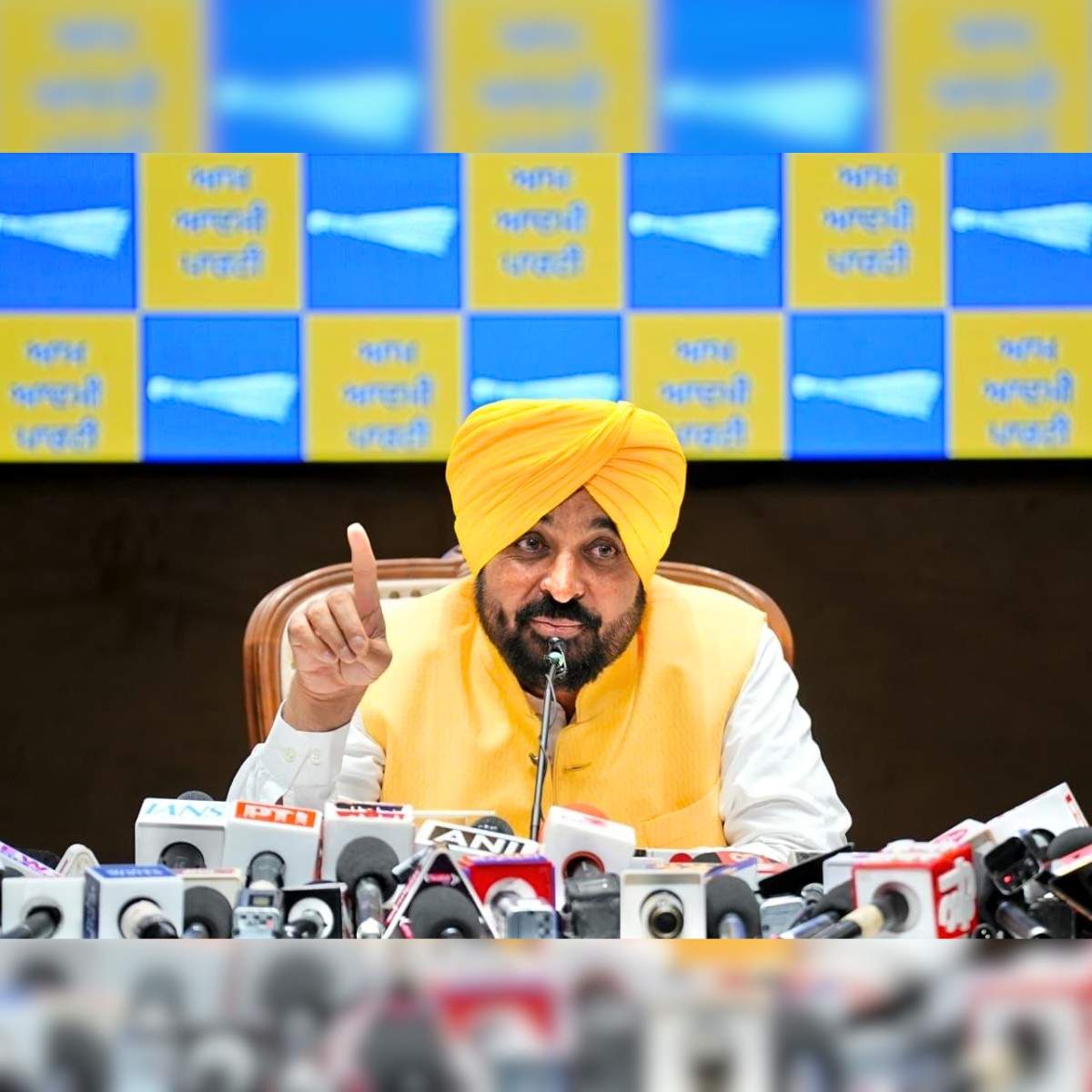
Faridkot: The Bhagwant Mann Faridkot Rally generated significant political discussion as Punjab Chief Minister Bhagwant Singh Mann launched a strong attack on the Badal family and the Shiromani Akali Dal leadership during a public interaction program in Panjgrain Kalan village.
Addressing residents during the “Lok Milni” event, Mann alleged that the Akali leadership repeatedly compromised Punjab’s interests, supported the controversial farm laws, misused religion for political gains, and allowed the drug problem to grow in the state.
Mann Compares Previous Governments With Current Administration
During the Bhagwant Mann Faridkot Rally, the Chief Minister said previous governments pushed Punjab toward unemployment and drug abuse.
He also blamed them for the state’s economic decline. In contrast, Mann said the Aam Aadmi Party government is taking strong action against drug traffickers.
He highlighted transparent government recruitment and healthcare improvements. Furthermore, he emphasized welfare schemes for women.
He also pointed to major reforms in the education sector.
Furthermore, Mann stated that his government remains committed to building a healthier, better educated, and more prosperous Punjab.
Sharp Criticism of Akali Leadership
The Chief Minister intensified his criticism by alleging that the Badal family prioritized personal and political interests over public welfare.
He claimed that Punjab’s people have not forgotten past political decisions that affected the state’s interests. Moreover, he accused the Akali leadership of changing its political stand whenever it suited their objectives.
According to Mann, the public will continue to hold political leaders accountable for decisions that negatively impacted Punjab.
Farm Laws and Political Accountability
A major focus of the Bhagwant Mann Faridkot Rally was the debate surrounding the three farm laws.
Mann alleged that when farmers across the country were protesting against the legislation, the Akali leadership supported the laws to protect its political position within the central government.
Additionally, he argued that Punjab’s people continue to remember those political choices and their impact on the farming community.
Remarks on Religion and Punjab’s Future
The Chief Minister also accused opposition leaders of using religion for political purposes. He stressed that political parties should work for public welfare rather than exploit religious sentiments.
At the same time, Mann emphasized the importance of preserving Punjab’s cultural and spiritual values while focusing on development and good governance.
He reiterated that his administration is working to improve education, healthcare, employment opportunities, and public services across the state.
Speaker Sandhwan Also Present
Punjab Assembly Speaker Kultar Singh Sandhwan attended the event alongside the Chief Minister.
Several local leaders and party workers also participated in the public interaction program, which drew a large gathering of residents from the region.
Conclusion
The Bhagwant Mann Faridkot Rally highlighted the growing political battle ahead of future elections in Punjab. While Mann strongly criticized the Badal family and Akali leadership over past decisions, he also used the platform to showcase his government’s achievements and future vision.
As political competition intensifies in the state, such public rallies are likely to remain a key part of Punjab’s evolving political landscape.
Key Highlights of the news:
- Chief Minister Bhagwant Mann strongly criticized the Badal family and Akali leadership during a public gathering in Faridkot.
- He accused the Akali leadership of supporting the three controversial farm laws and compromising Punjab’s interests.
- Mann claimed previous governments pushed Punjab toward drug abuse, unemployment, and decline.
- He highlighted his government’s actions against drug traffickers, transparent recruitment, healthcare expansion, and education reforms.
- The Chief Minister said his government remains focused on building a healthier, educated, and prosperous Punjab.