
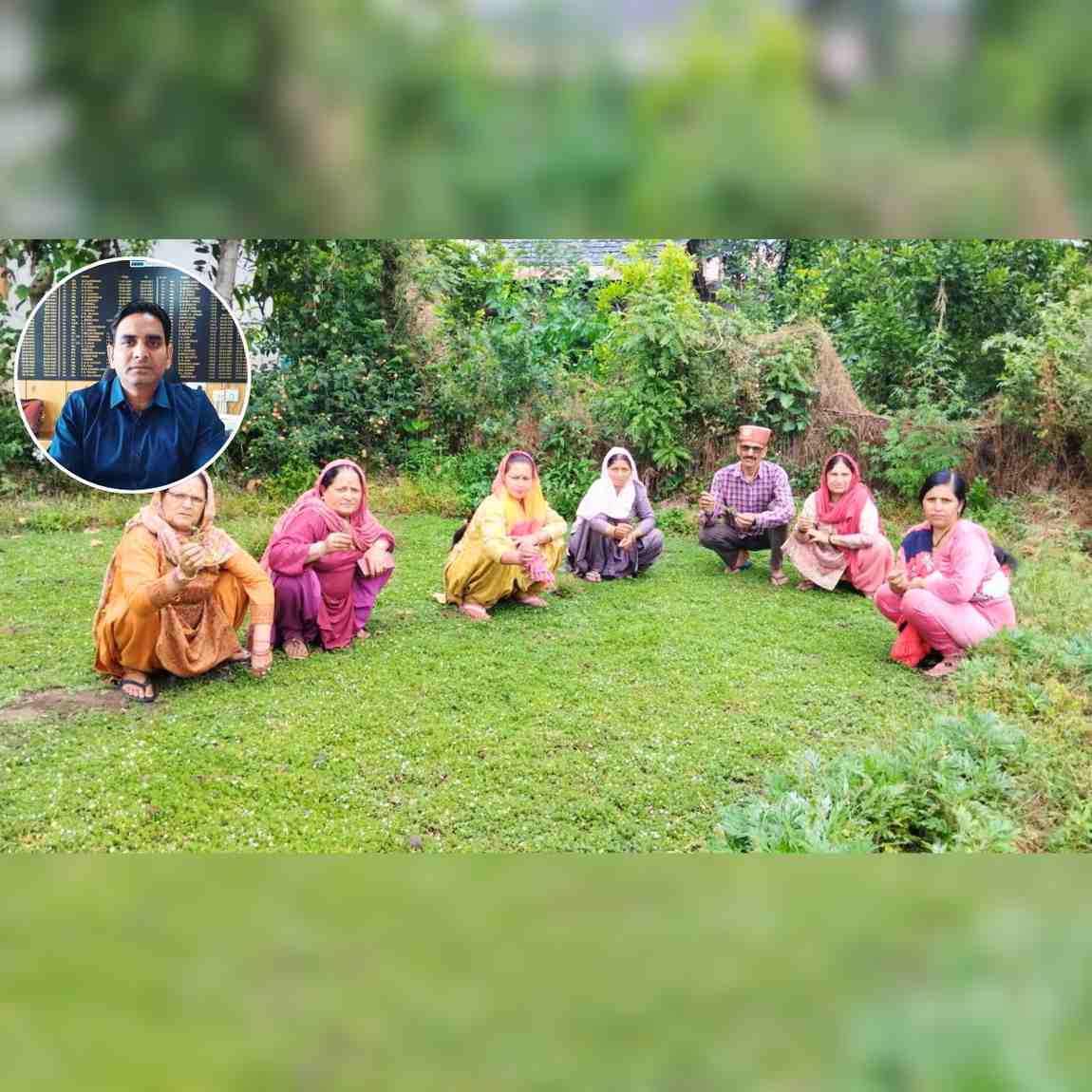
Kangra (Kameshwar Sharma): The Brahmi Farming Success Fuels Rural Growth in Kangra story is becoming a powerful example of women empowerment and rural development. Women associated with self-help groups (SHGs) in Dhang village of Baijnath subdivision have transformed medicinal farming into a profitable venture. As a result, they have increased their income and created new opportunities for local communities.
Under the leadership of Chief Minister Sukhvinder Singh Sukhu, the Himachal Pradesh government continues to promote rural entrepreneurship. Moreover, various schemes encourage self-employment, medicinal crop cultivation, and women-led businesses.
Women Turn a Small Initiative into a Success Story
A few years ago, women in Dhang village had limited knowledge about Brahmi cultivation. In addition, they lacked access to reliable markets. Despite these challenges, they decided to utilize unused agricultural land and began farming Brahmi on a small scale.
Initially, they planted around 1,300 saplings. Although the first year’s results remained modest, the women continued their efforts. Consequently, their persistence and dedication laid the foundation for long-term success.
Technical Support Boosts Production
The women sought guidance from government departments and research institutions. Furthermore, they received Brahmi plants and technical assistance through the support of CSIR-IHBT.
Thanks to scientific cultivation methods and regular training, production increased significantly. Today, Brahmi cultivation has become the identity of the village. Moreover, the growing fields now inspire other farmers to explore medicinal crop farming.
SHGs Add Value Through Innovative Products
The Durga Shakti, Jagriti, Lakshmi, and Prerna self-help groups have played a key role in this transformation. Besides selling fresh Brahmi, they also manufacture value-added products.
These products include herbal candies, syrups, medicinal preparations, and health beverages. Therefore, the groups earn higher profits while meeting growing consumer demand. At the same time, these products help expand their market reach beyond local areas.
Strong Market Demand Increases Earnings
Local farmer Govind Singh explained that finding buyers was once the biggest challenge. However, market conditions improved steadily over time. Eventually, companies began approaching the groups directly.
One company assured the women that it would purchase their entire Brahmi output. As a result, farmers expanded cultivation and increased production. Today, fresh Brahmi reaches markets in Haryana and other states, where manufacturers use it in Ayurvedic medicines and wellness products.
Fresh Brahmi sells at ₹200 to ₹250 per kilogram. Meanwhile, dried Brahmi earns up to ₹1 lakh per quintal. Additionally, farmers sell Brahmi plants to other growers, creating another source of income.
Production Growth Highlights Success
The numbers clearly demonstrate how Brahmi Farming Success Fuels Rural Growth in Kangra. During the first year, production reached only 12 kilograms. The following year, output climbed to 70 kilograms. Later, production touched 122 kilograms in the third year.
Furthermore, farmers now harvest the crop three times annually. Therefore, they enjoy a steady income throughout the year while reducing financial uncertainty.
Government Backs Women Entrepreneurs
Deputy Commissioner Hemraj Bairwa praised the achievements of the women-led groups. According to him, the groups now produce nearly 125 quintals of Brahmi annually and earn substantial income through sales.
He also emphasized the need for processing units in the future. Such facilities would help farmers create more value-added products and secure even better returns. Moreover, the administration plans to continue supporting these groups through various development initiatives.
A Model for Sustainable Rural Development
The success of Brahmi cultivation proves that collective effort and government support can transform rural communities. Women who once faced limited economic opportunities now run successful enterprises and contribute significantly to their local economy.
As demand for medicinal and herbal products continues to rise, Brahmi farming offers strong growth potential. Therefore, this model can inspire other villages across Himachal Pradesh and India.
Conclusion
The remarkable story of Brahmi Farming Success Fuels Rural Growth in Kangra highlights how innovation, determination, and community participation can create lasting change. Through medicinal farming and value-added products, women SHGs have strengthened their financial position while driving rural development. As cultivation expands further, this initiative is expected to generate even greater opportunities for women entrepreneurs and farmers in the years ahead.
Key Points of the News
- Women SHGs in Kangra successfully expanded Brahmi cultivation under Mission Dhanvantari.
- Production increased from 12 kilograms in the first year to 122 kilograms in the third year.
- Farmers now produce value-added products such as Brahmi candy, syrups, and health drinks.
- Fresh Brahmi sells for ₹200–₹250 per kilogram, while dried Brahmi fetches up to ₹1 lakh per quintal.
- Several companies now purchase Brahmi directly, ensuring stable market demand.